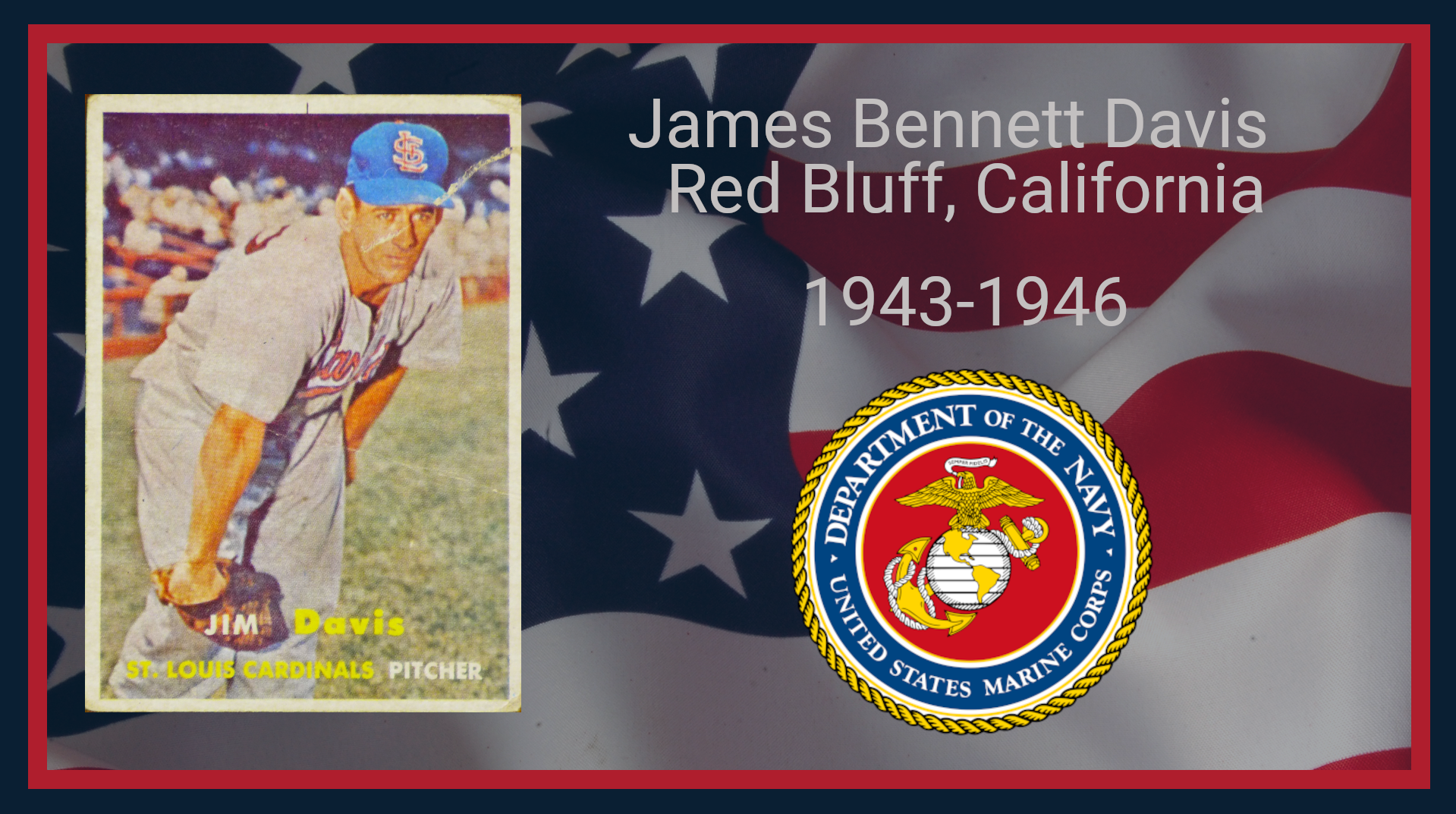
Jim Davis
Marine Corps Service
James Bennett “Jim” Davis earned the title of United States Marine during World War II, after graduating from Red Bluff High School in California. A contemporary profile published during his rookie season reported that he signed his first professional baseball contract in 1946 following his discharge from the Marine Corps.
Beyond those facts, the surviving public record is unusually thin. An online service profile attributes to Davis the rank of corporal, recruit training at Marine Corps Recruit Depot San Diego, and participation in the battles of Saipan and Iwo Jima. That profile provides no service record, unit, muster roll, contemporary account, or other traceable documentation supporting those details. They may ultimately prove accurate, but they cannot presently be distinguished from an unsupported user submission or a mistaken identification involving another Marine with the same common name.
Accordingly, this profile does not claim a rank, unit, decoration, overseas station, or combat participation for Davis. The 1943–1946 dates traditionally associated with his service are retained on the introductory slide, but the available sources independently establish only that he served in the Marine Corps during World War II and had been discharged before beginning his professional career in 1946. Additional documentation from Davis’s family, official personnel file, or Marine Corps muster rolls would be especially valuable.
Baseball Career
Born in Red Bluff on September 15, 1924, Davis was a switch-hitting, left-handed pitcher. He began his professional career with the Lynn Red Sox in 1946 and went 9–7 with a 2.32 earned-run average. After four seasons in the Boston organization, he joined the Seattle Rainiers of the Pacific Coast League. Davis spent four years with Seattle and went 13–8 with a 3.08 ERA in 217 innings during his final season there.
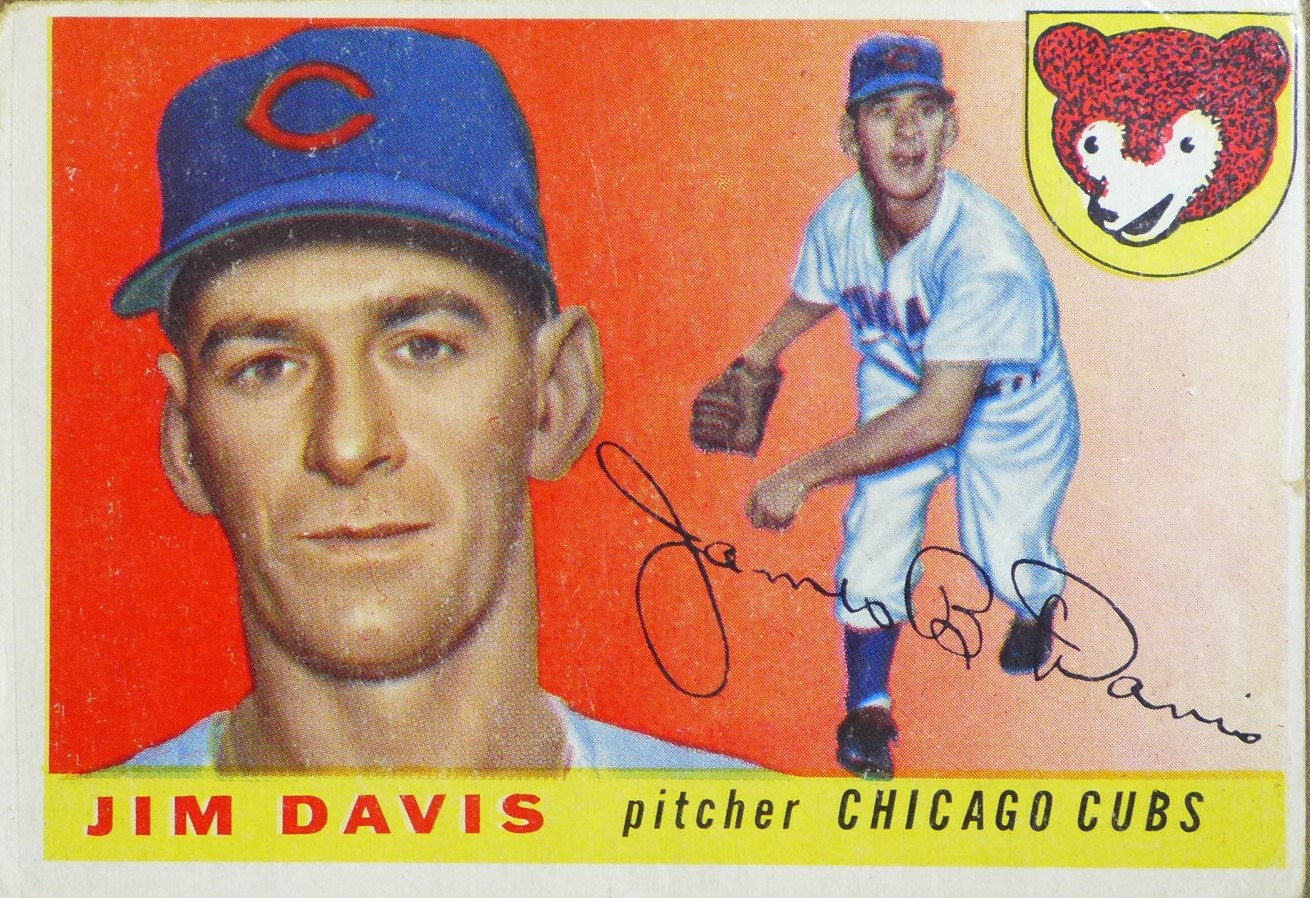
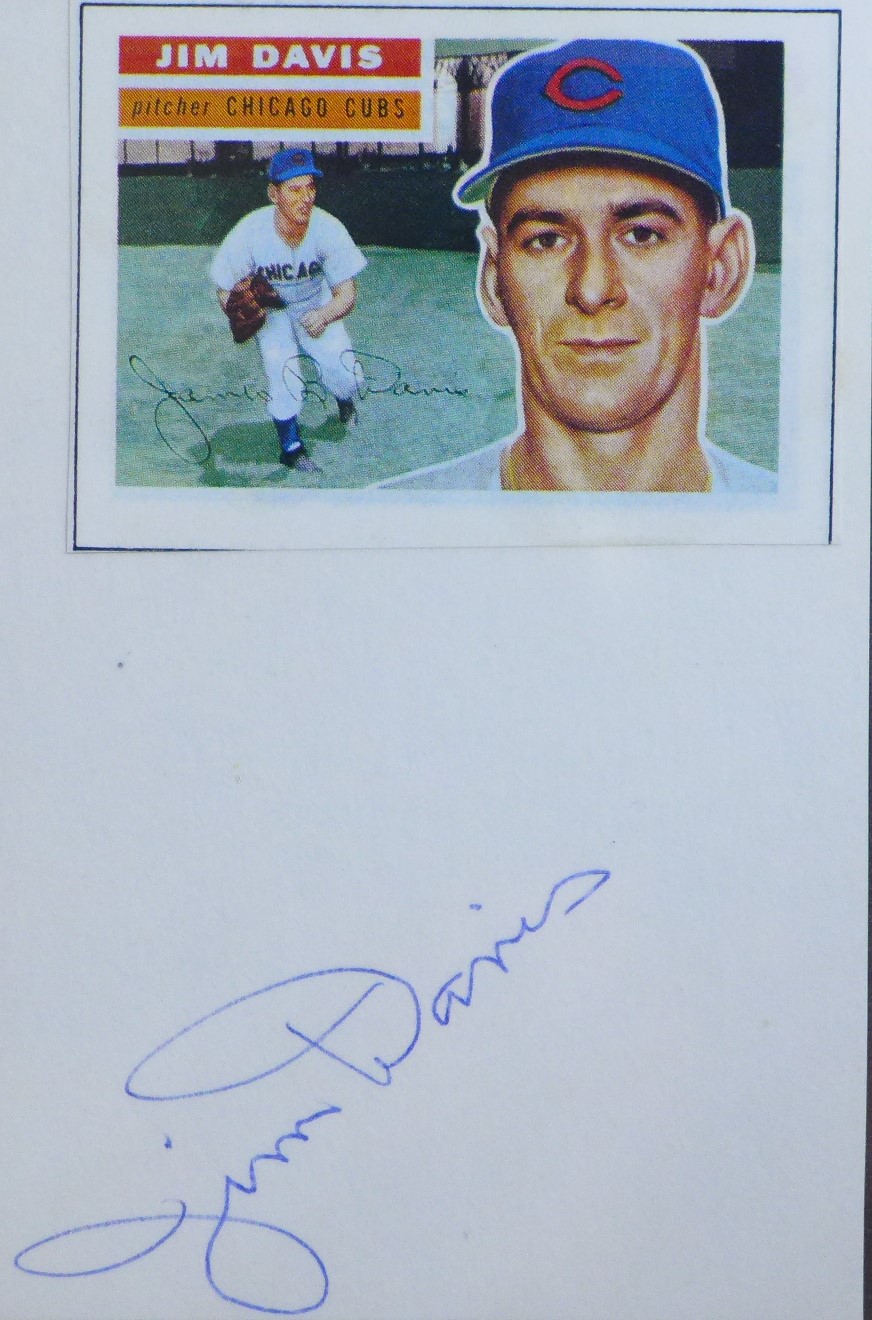
The Chicago Cubs acquired Davis shortly after the start of the 1954 season, and he made his Major League debut on April 18. Used as both a starter and reliever, the 29-year-old rookie produced the best season of his Major League career: an 11–7 record, a 3.52 ERA, two complete games, and four saves across 46 appearances and 127⅔ innings.
Davis entered the record book against the St. Louis Cardinals on May 27, 1956. Pitching the sixth inning, he struck out Hal Smith and Jackie Brandt before striking out Lindy McDaniel on a pitch that escaped catcher Hobie Landrith, allowing McDaniel to reach first. Davis then struck out Don Blasingame for his fourth strikeout of the inning.
He was not the first Major League pitcher to accomplish the feat, but he was the first in forty years—since Guy Morton in 1916. Davis was also the first National League pitcher with a four-strikeout inning since Orval Overall in 1908.
Davis threw both a screwball and a knuckleball. He pitched for the Cubs through 1956, then appeared for the St. Louis Cardinals and New York Giants in 1957. His final Major League game came with New York on July 7. Across four seasons, Davis appeared in 154 games, made 39 starts, and finished with a 24–26 record, eight saves, a 4.01 ERA, and 197 strikeouts in 406⅓ innings.
Gallery
Later Life and Legacy
Davis continued pitching in the minor leagues through 1959, completing a 14-year professional career. His four-strikeout inning remained an exceptional rarity: when he accomplished it, no Major League pitcher had done so during his entire lifetime.
Davis died in San Mateo, California, on November 30, 1995, at age 71. He is remembered as a World War II Marine, a durable major-league left-hander, and the pitcher who revived one of baseball’s strangest records after a forty-year absence.
Sources and Further Reading
- Major League Baseball — Jim Davis statistics and biographical data
- Baseball-Reference — Jim Davis Major League record
- Major League Baseball — pitchers with four strikeouts in one inning
- Society for American Baseball Research — “Fanning Four Batters in One Inning”
- Manchester Evening Herald, July 19, 1954 — contemporary Davis profile
- Wikipedia — Jim Davis