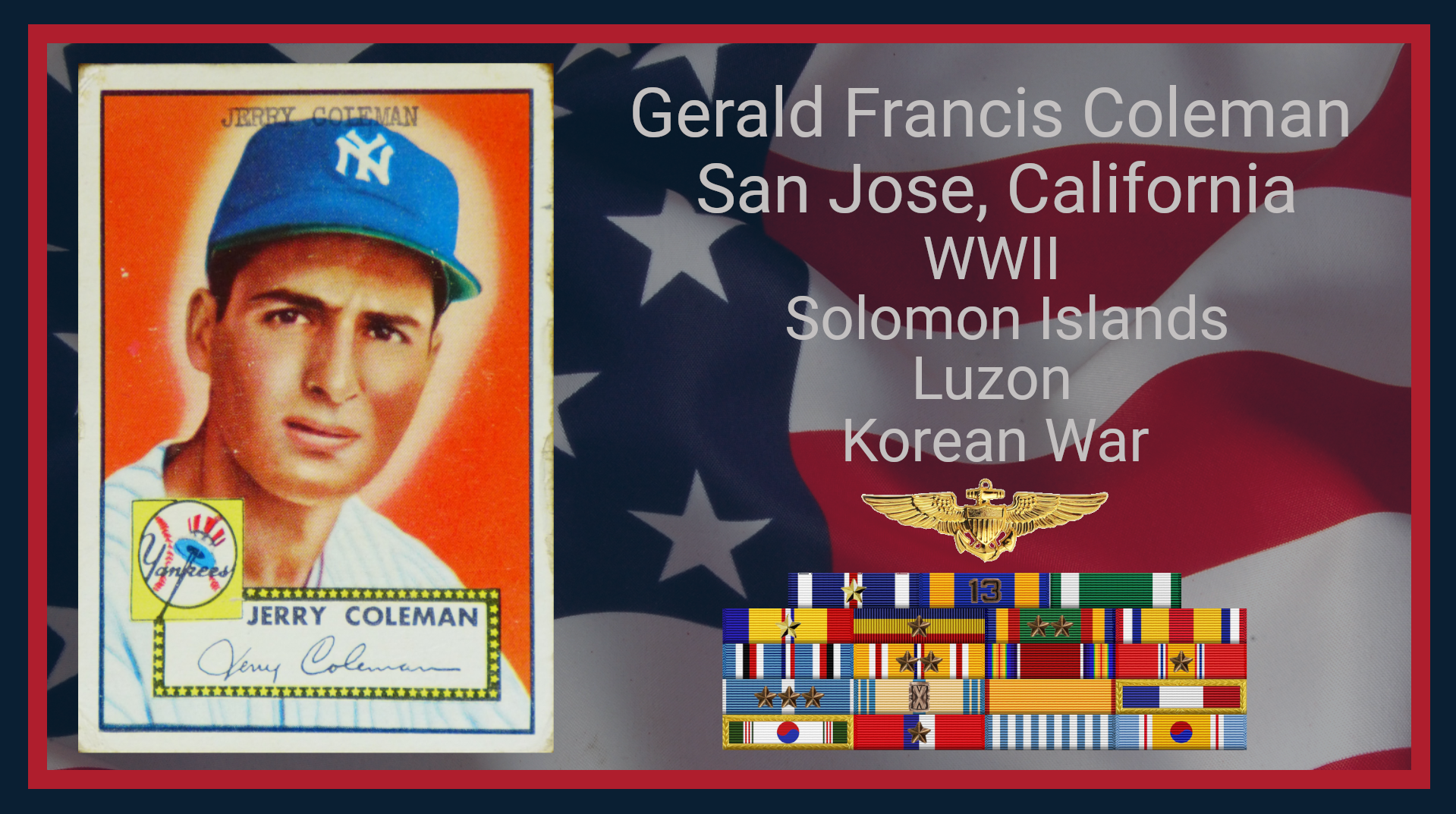
Jerry Coleman
Marine Corps Service
Gerald Francis “Jerry” Coleman entered the Navy’s V-5 aviation-cadet program in 1942, shortly after beginning his professional baseball career in the Yankees organization. Inspired by Marine fighter ace Joe Foss, Coleman chose the Marine Corps, earned a commission as a Marine officer, and received his wings as a naval aviator.
During World War II, Coleman flew the SBD Dauntless dive bomber with Marine Scout Bombing Squadron 341, the “Torrid Turtles.” The squadron operated from the northern Solomon Islands before moving into the Philippines, where Coleman flew close-air-support missions during the Luzon campaign. He completed 57 combat missions before returning to inactive status and professional baseball.
The Marine Corps recalled Coleman in 1952. After refresher training, he joined Marine Attack Squadron 323, the “Death Rattlers,” in Korea and flew the AU-1 Corsair. From January through May 1953, he completed 63 missions involving close air support, interdiction, armed reconnaissance, and strikes against enemy positions. His aircraft narrowly avoided a collision with a damaged Air Force jet on one occasion. On another, an engine failure forced him to crash-land a fully armed Corsair; the aircraft overturned, and a corpsman freed him before his tightened helmet strap strangled him.
Coleman finished his Korean tour working as a forward air controller near the front. Across two wars he flew 120 combat missions and received two Distinguished Flying Crosses, 13 Air Medals, and three Navy citations. He continued serving in the Marine Corps Reserve and retired as a lieutenant colonel in 1964.
Baseball Career
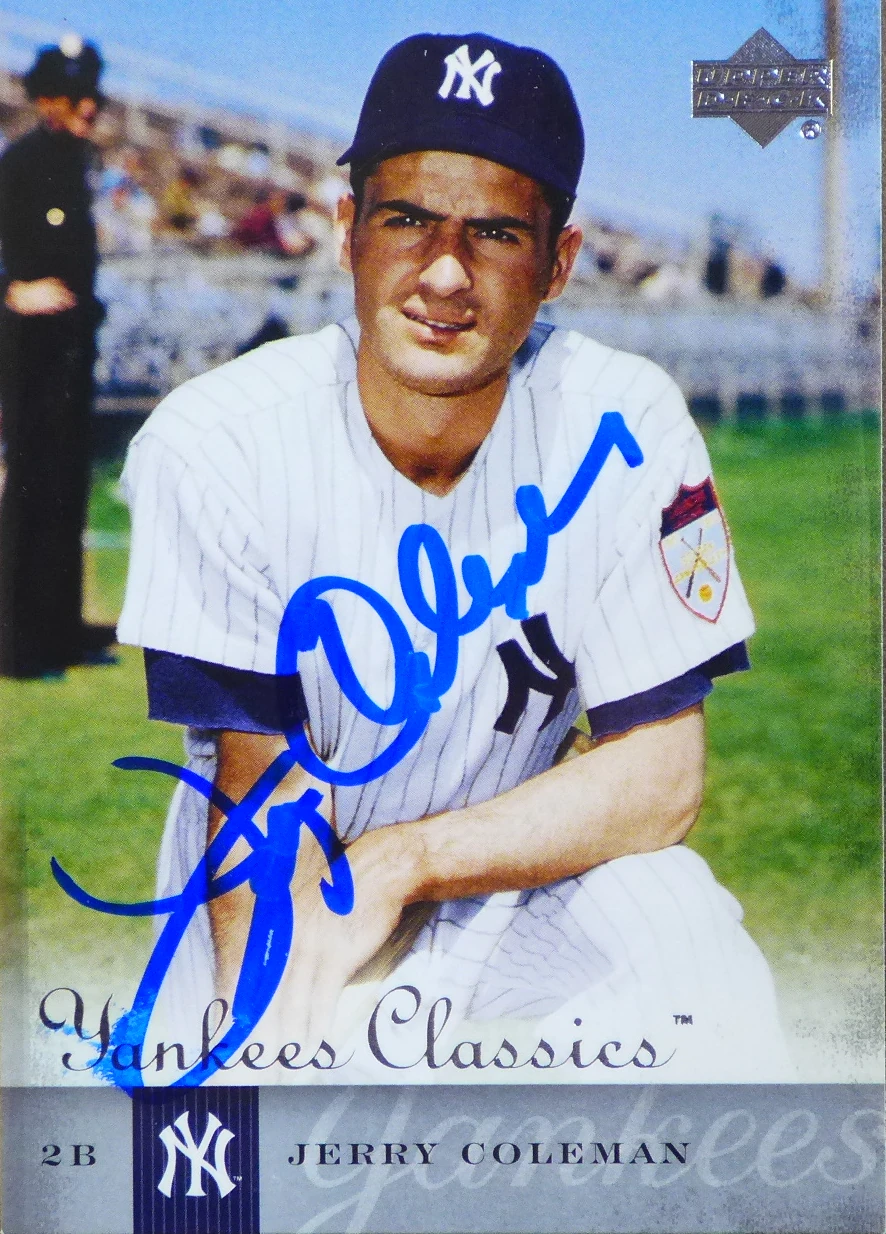
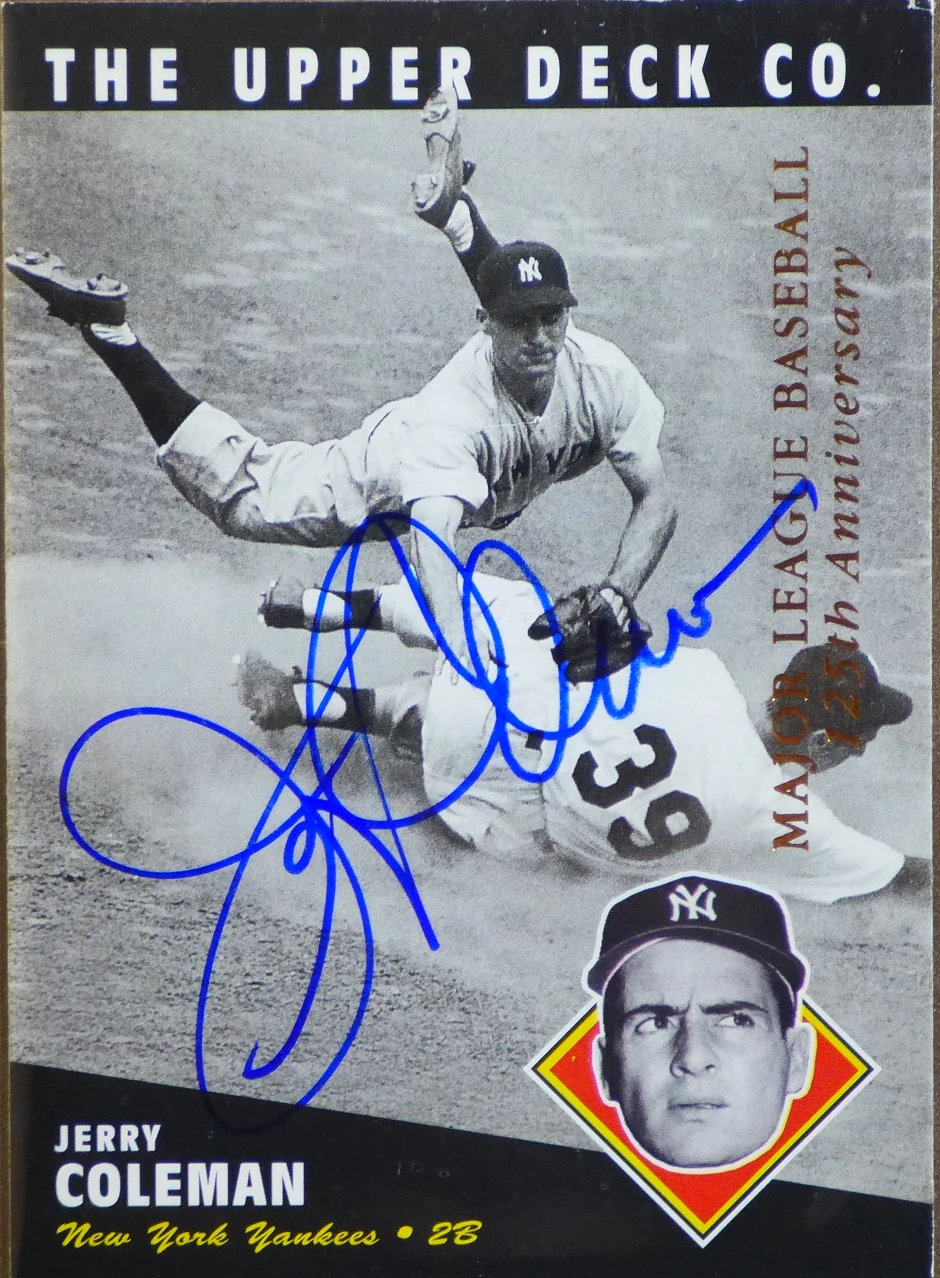
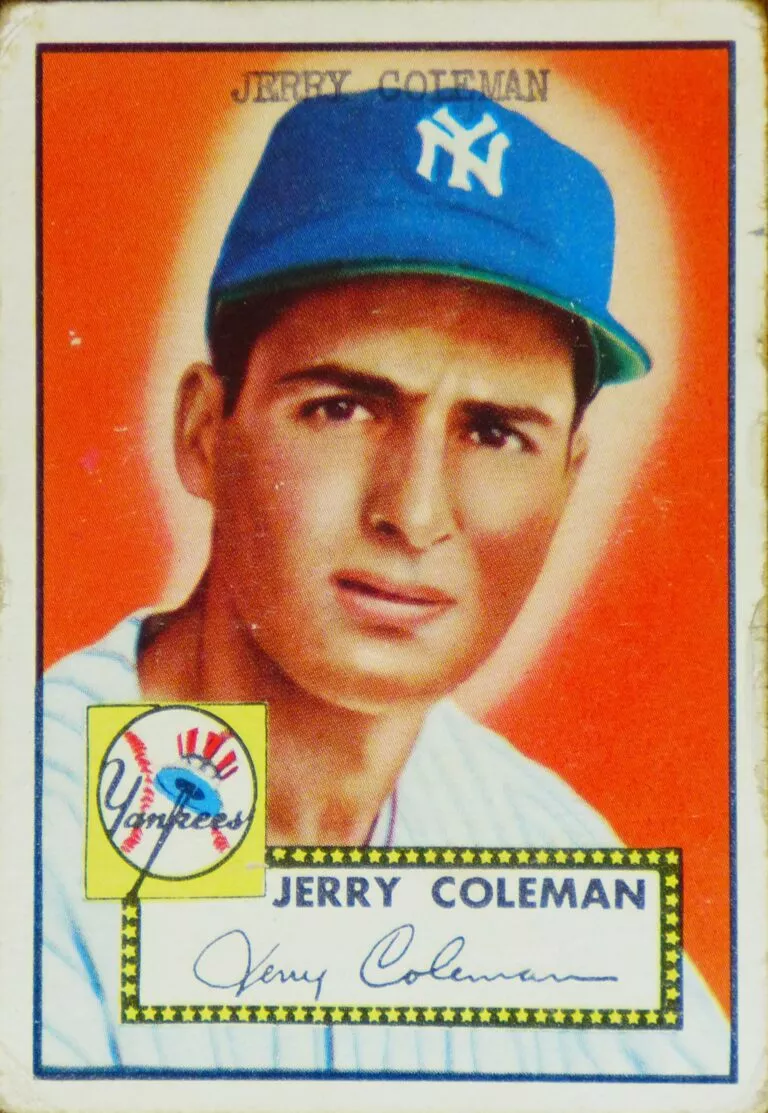
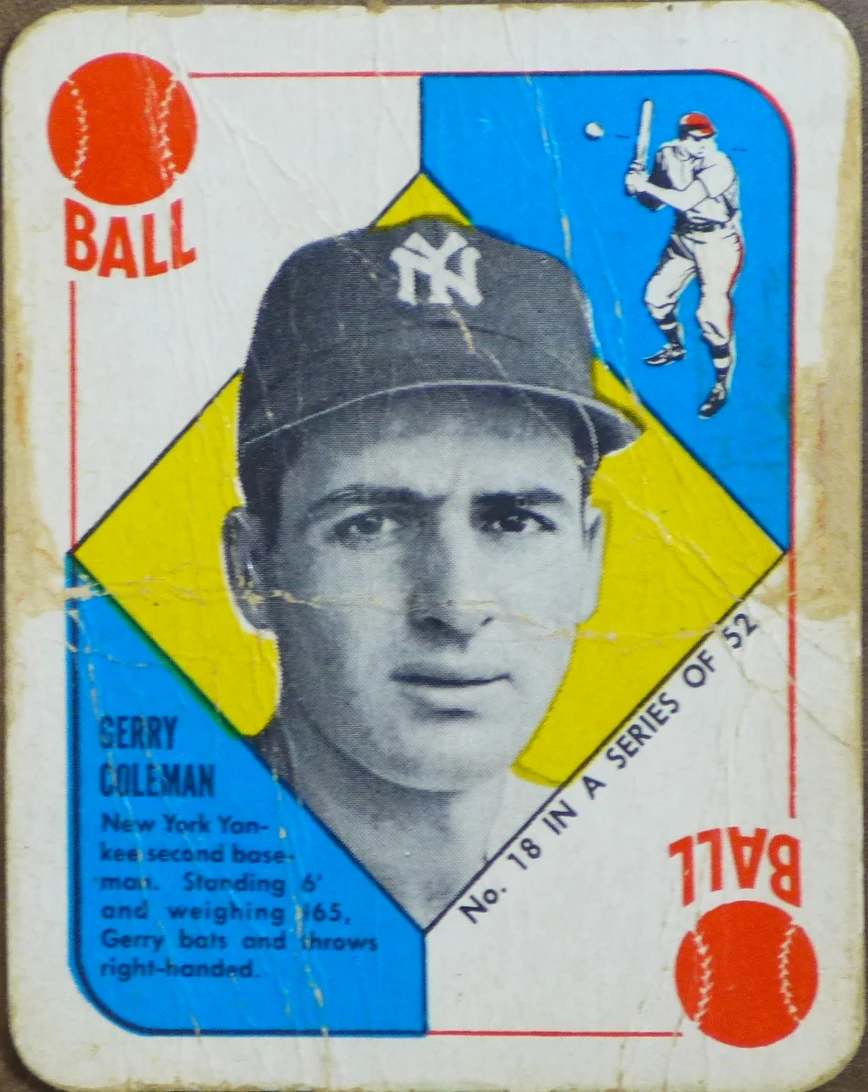
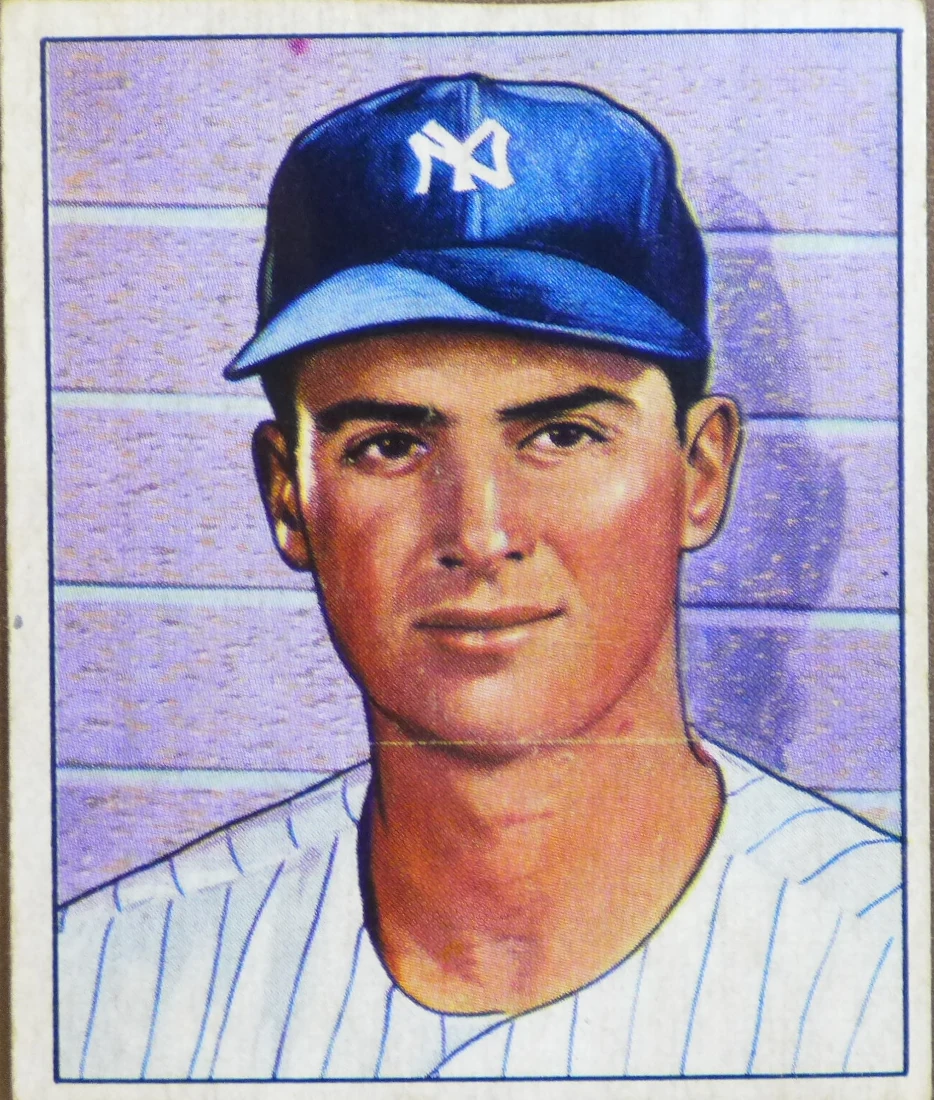
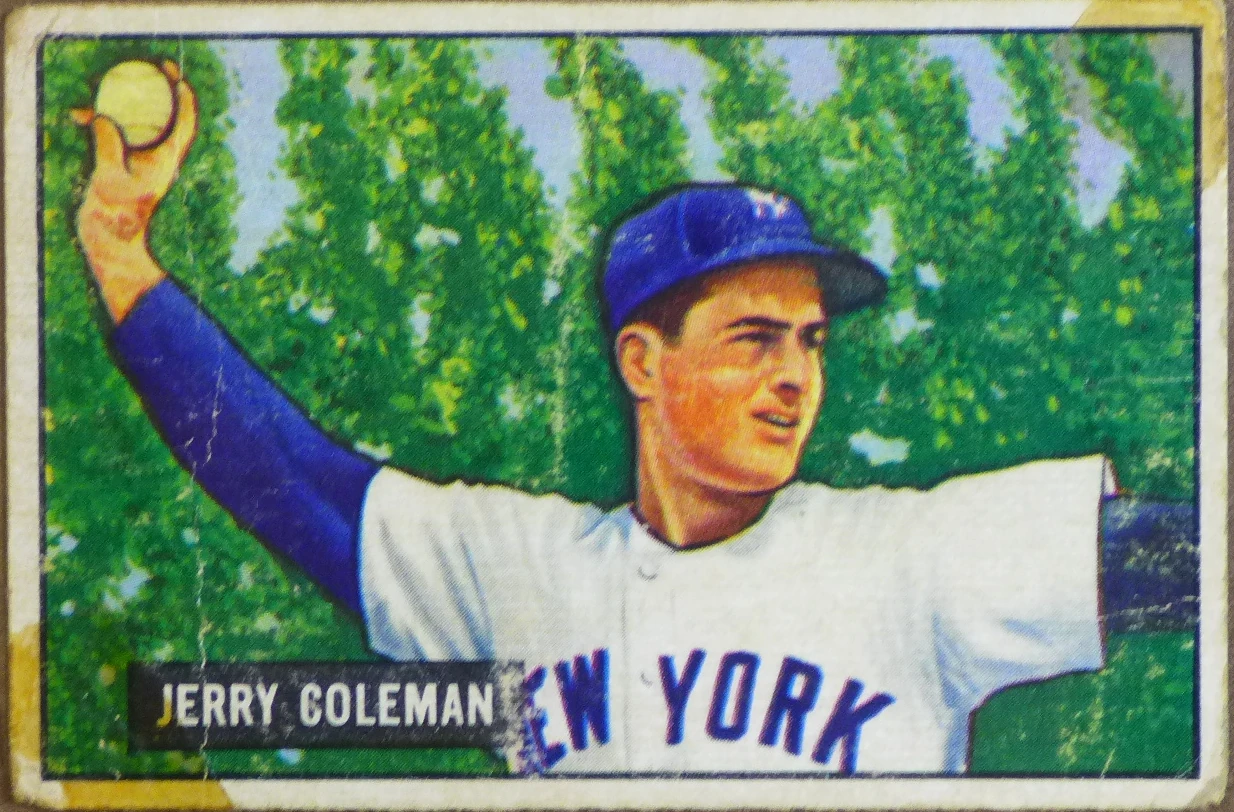
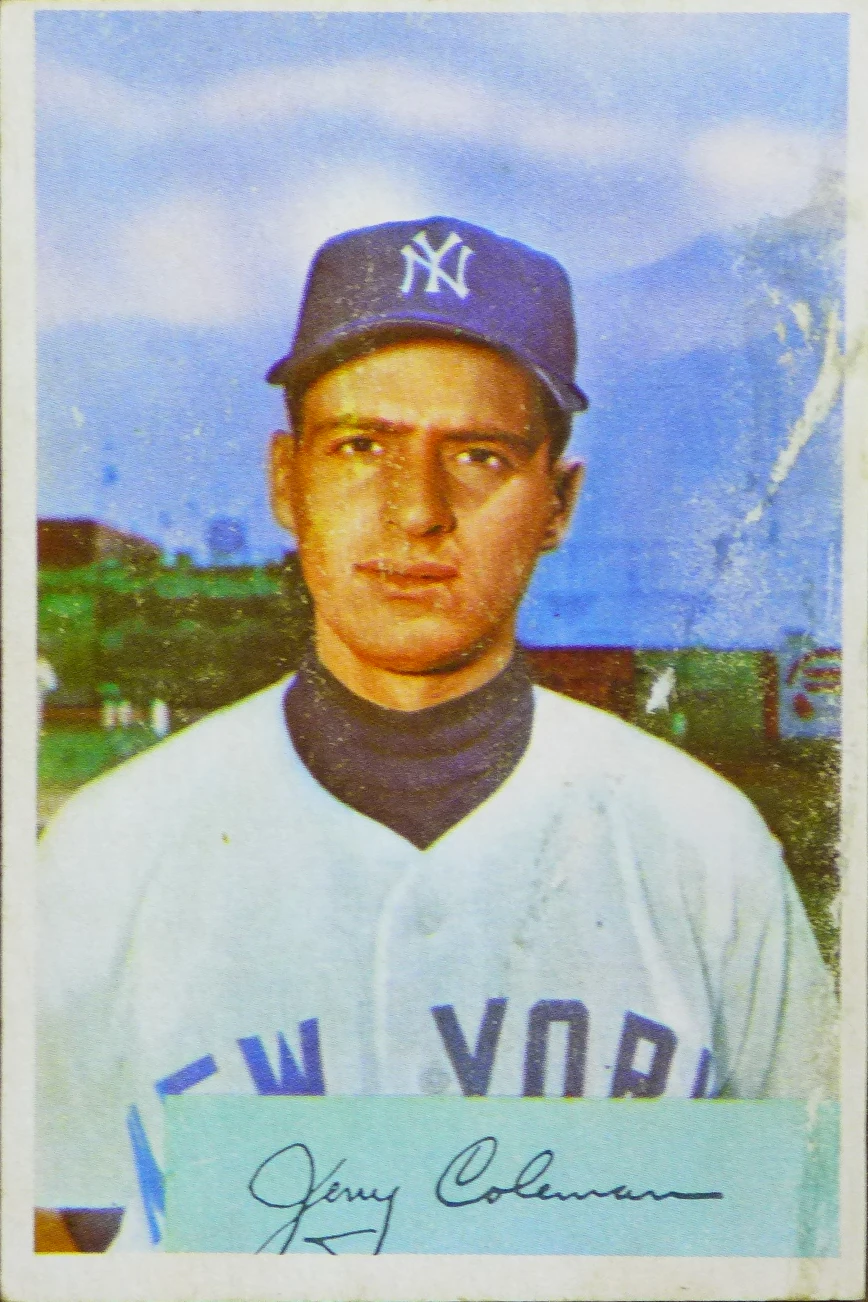
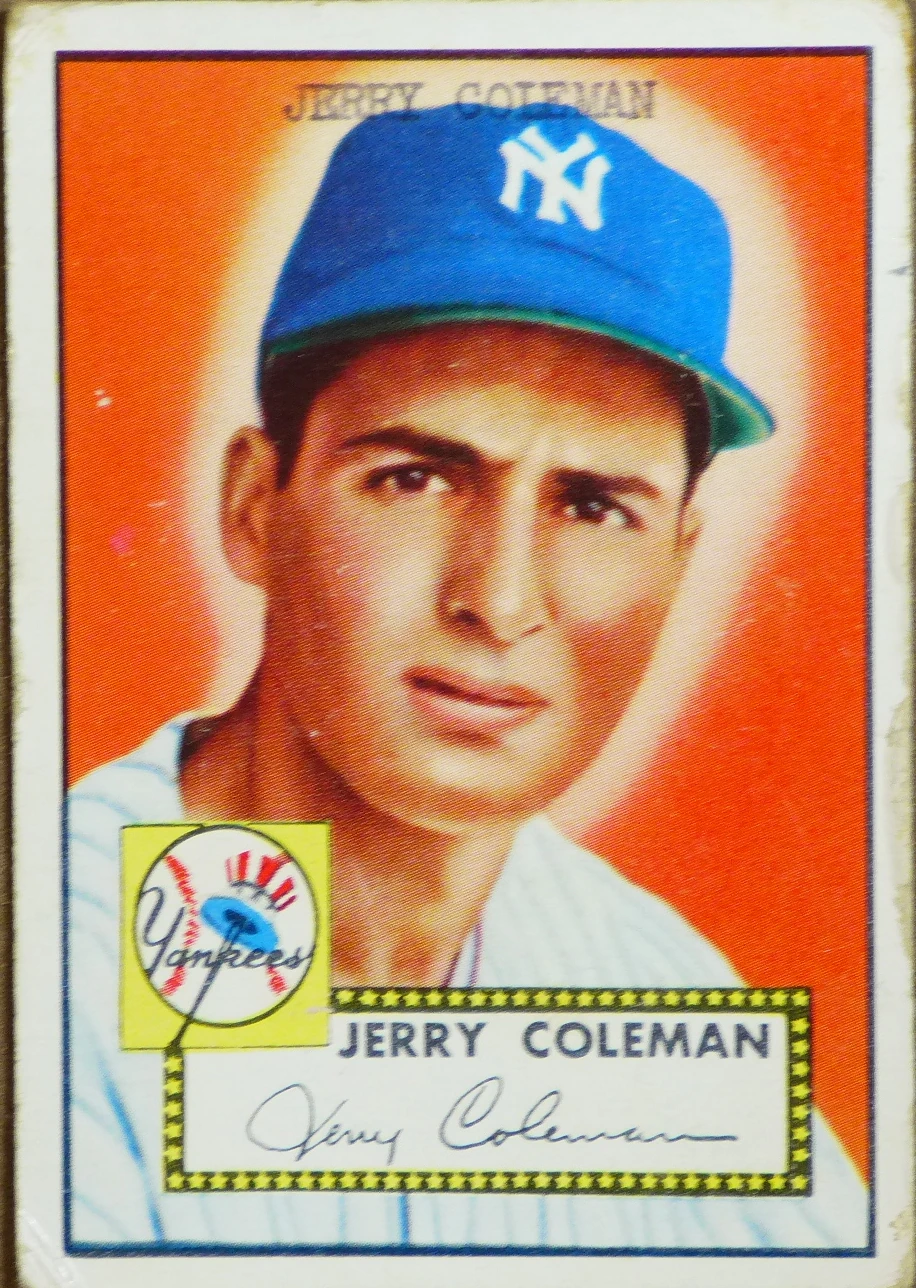
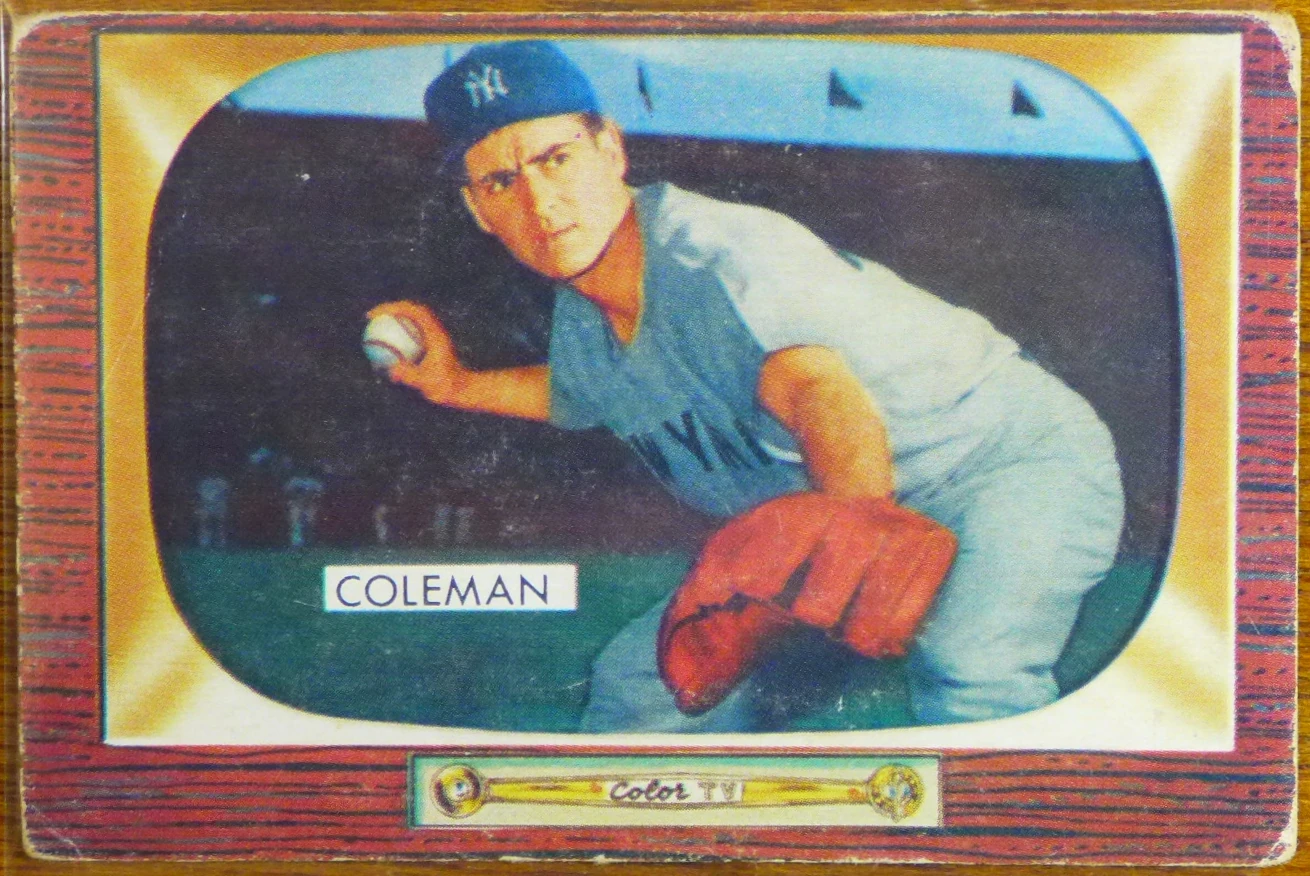
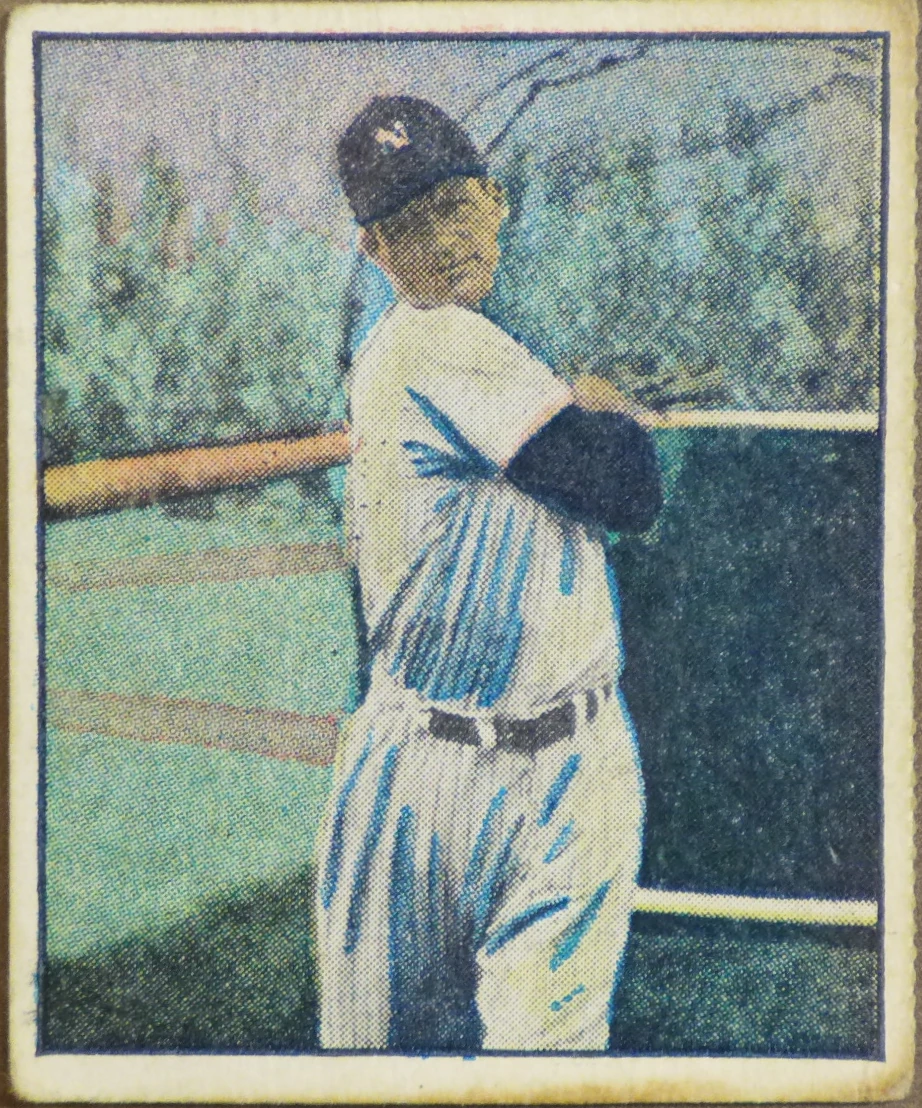
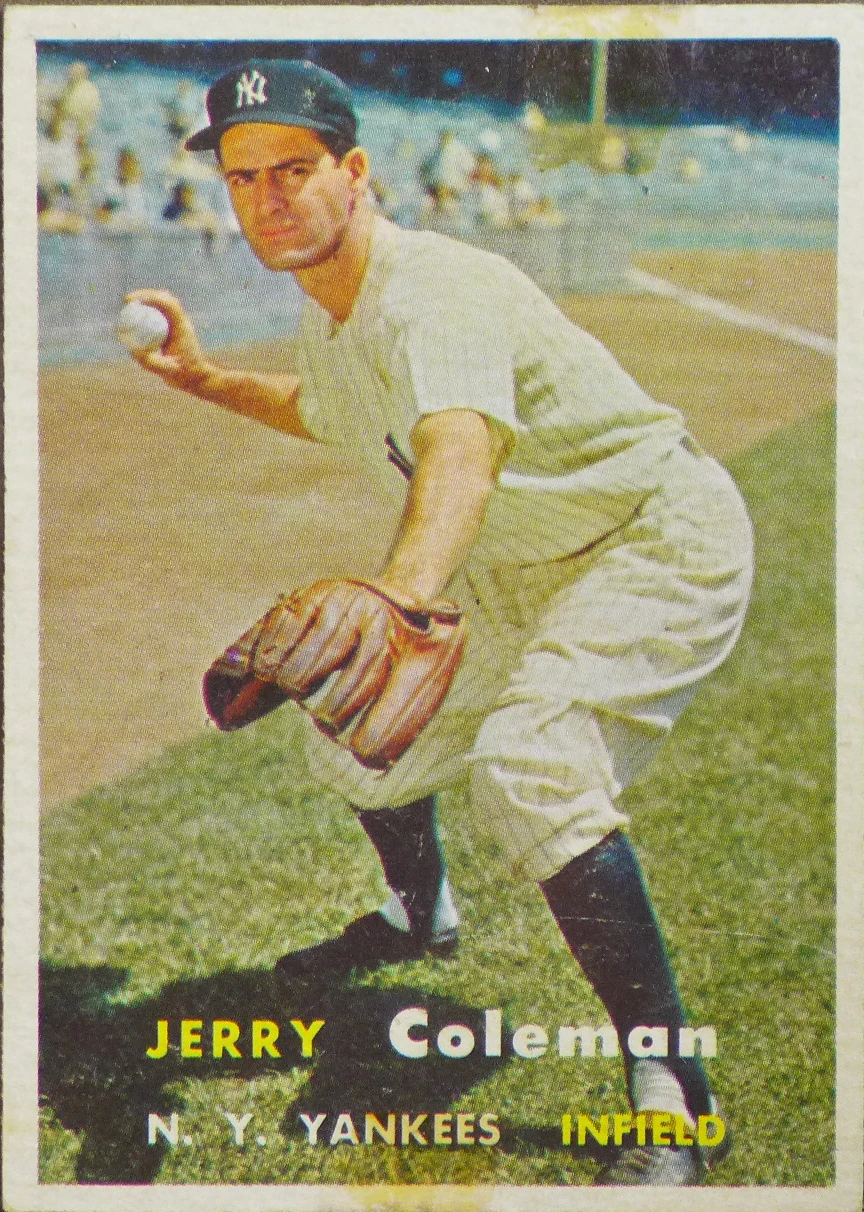
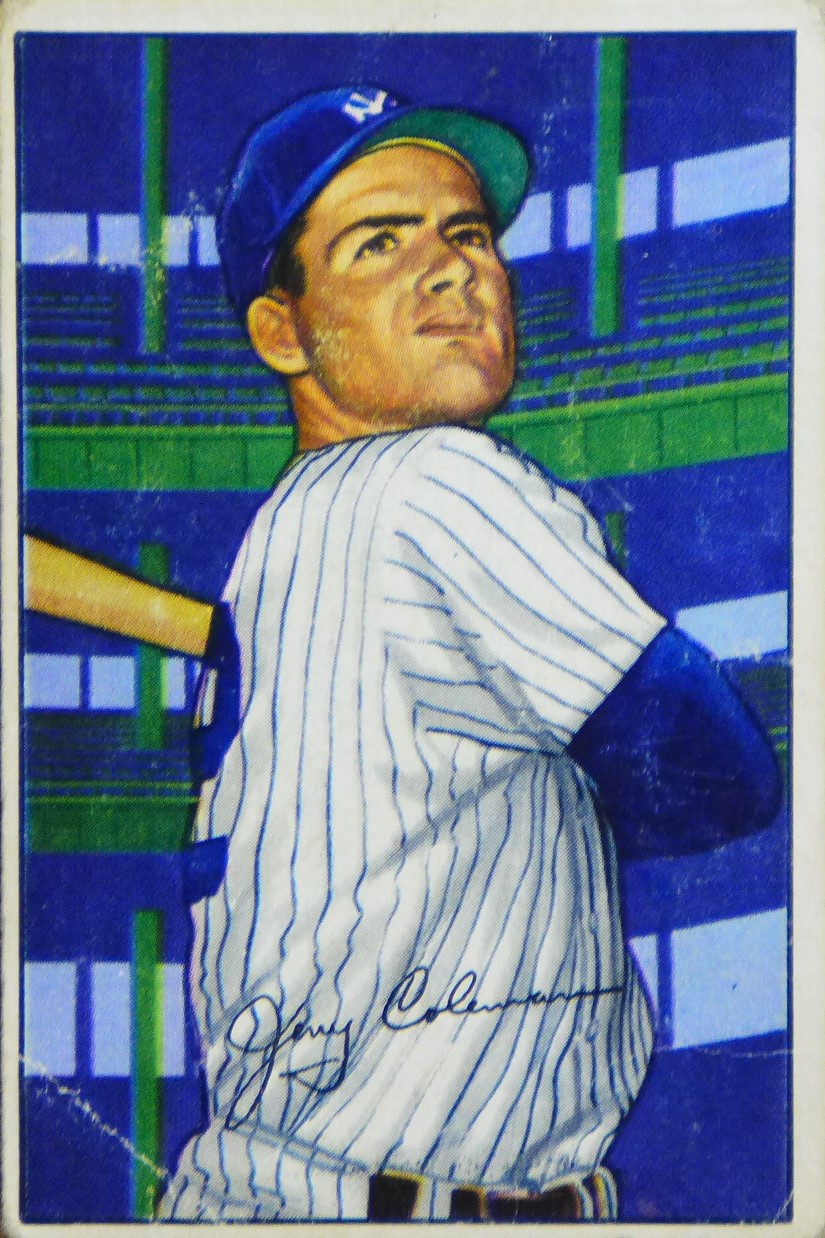
Coleman resumed his climb through the Yankees farm system after World War II and made his Major League debut on April 20, 1949. The Associated Press named him its American League Rookie of the Year after he became New York’s regular second baseman and helped the club begin a run of five consecutive World Series championships.
In 1950, Coleman was selected to the American League All-Star team and played all 153 Yankees games. During New York’s four-game World Series sweep of the Philadelphia Phillies, he drove in the deciding run in Game 1, delivered the winning hit in the ninth inning of Game 3, and made several pivotal defensive plays. His performance earned him the Babe Ruth Award as the outstanding player of the Series.
His return to combat cost him most of the 1952 and 1953 seasons, and injuries limited him after Korea. Even so, Coleman appeared in six World Series and earned four championship rings. He played his final game on September 29, 1957, ending a nine-season Major League career spent entirely with the Yankees. In 723 games, he collected 558 hits and batted .263.
Gallery
Later Life and Legacy
Coleman moved into broadcasting in 1960 and joined the Yankees radio team in 1963, working alongside such voices as Mel Allen, Red Barber, and former teammate Phil Rizzuto. He moved west in 1970 and became the voice of the San Diego Padres in 1972. Except for one season managing the Padres in 1980, he remained associated with their broadcasts for the rest of his life.
San Diego listeners knew “The Colonel” for his calls “Oh, Doctor!” and “Hang a star on that one, baby!”—the latter used after an exceptional defensive play. Coleman also worked national assignments, including two World Series and 18 League Championship Series. The National Baseball Hall of Fame honored him with the Ford C. Frick Award in 2005.
Coleman entered the Marine Corps Sports Hall of Fame and the International Air & Space Hall of Fame. The Padres unveiled his statue at Petco Park in 2012, and Marine Corps Recruit Depot San Diego later named its athletic facility Coleman Field in his honor. He died on January 5, 2014, remembered as a champion ballplayer, a beloved broadcaster, and the only Major League player documented as flying combat missions in both World War II and Korea.
Sources and further reading
- United States Marine Corps History Division — U.S. Marines in the Korean War
- United States Marine Corps — History of Marine Fighter Attack Squadron 323
- United States Naval Institute — “Better Than Baseball,” Coleman’s account of his aviation service
- National Baseball Hall of Fame and Museum — Jerry Coleman’s military and baseball service
- National Baseball Hall of Fame and Museum — 2005 Ford C. Frick Award biography
- Society for American Baseball Research — Jerry Coleman biography
- Major League Baseball — Jerry Coleman statistics and honors
- San Diego Padres — Jerry Coleman obituary and career retrospective
- Major League Baseball — Jerry Coleman tribute at Petco Park
- Times of San Diego — MCRD San Diego dedicates Coleman Field
- Video biography of Jerry Coleman
- Wikipedia — Jerry Coleman